
Compliance guides
Every permit and tax a US carrier owes, explained.
US motor carriers answer to a stack of federal and state obligations: authority, fuel tax, weight-distance taxes, registrations, and permits. Each has its own rule for whether it applies, its own deadline, and its own penalty for missing it. These guides explain each one in plain English: what it is, who owes it, how it's calculated, and when it's due.
Where it gets checked
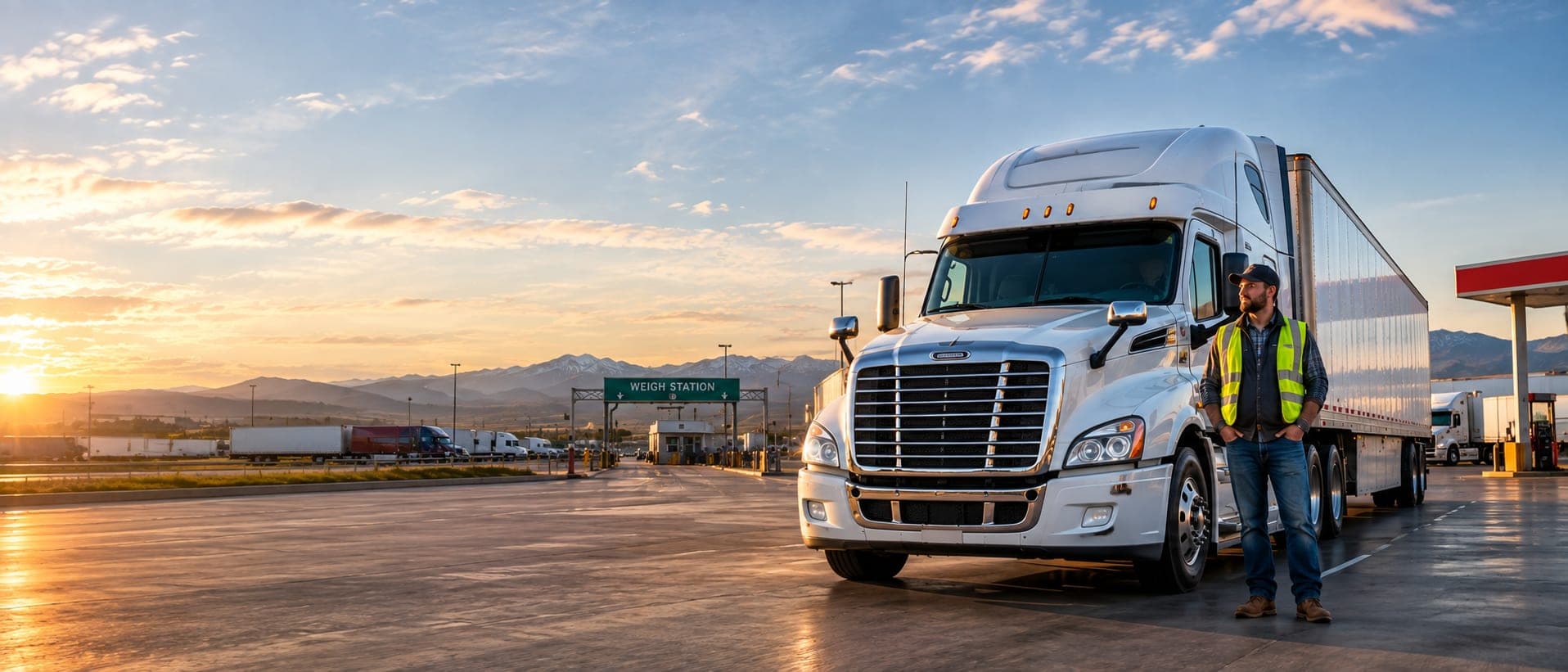
At the scale house your UCR, IFTA and IRP status come up by USDOT number, before anyone looks at your paperwork.
State weight-distance taxes at a glance
Five states tax heavy trucks by the mile, separately from IFTA fuel tax. If you run in any of them above the weight threshold, you owe a return, even for zero miles in some states.
| State | Program | Applies over | Basis | Filing | Agency |
|---|---|---|---|---|---|
| OregonOR | Weight-Mile Tax | Over 26,000 lbs | Taxable miles × declared weight | Monthly (quarterly option) | Oregon DOT — Commerce & Compliance Division |
| New YorkNY HUT | Highway Use Tax | Over 18,000 lbs gross weight | Taxable miles × weight group | Quarterly | NY Dept. of Taxation & Finance |
| KentuckyKYU | Weight Distance Tax | 60,000 lbs and over | Taxable miles × per-mile rate | Quarterly | Kentucky Transportation Cabinet |
| New MexicoNM WDT | Weight Distance Tax | Over 26,000 lbs | Taxable miles × weight | Quarterly | NM Taxation & Revenue Department |
| ConnecticutCT HUF | Highway Use Fee | 26,000 lbs and over (Class 8–13) | Taxable miles × tiered per-mile rate | Monthly | CT Dept. of Revenue Services |
Thresholds and rates are summarized for orientation and change over time. Confirm against each agency before filing.
Guides
Oregon Weight-Mile Tax
Oregon taxes heavy trucks by the mile instead of at the diesel pump. Who owes it, how the weight-mile rate works, and how to report it.
Read the guide →IFTA Fuel Tax
The International Fuel Tax Agreement consolidates fuel-tax reporting across 58 jurisdictions into one quarterly return. Who qualifies, how net tax and credits work, and how to file.
Read the guide →State Trip & Fuel Permits
Running into a state where you're not registered for IRP or IFTA? You need a temporary trip permit and/or fuel permit first. The official government fee for each state — the price before any broker markup.
Read the guide →Trucking Fees by State
The real government price of every trucking permit, credential, and registration — by state and by fee type (trip/fuel permits, IFTA, oversize/overweight, intrastate authority, IRP). Sourced from each agency, verified and dated, before any broker markup.
Read the guide →IRP Apportioned Registration
The International Registration Plan lets interstate carriers run one apportioned plate across member jurisdictions. Who qualifies, how fees are apportioned by mileage, and how to register.
Read the guide →New York HUT
New York taxes trucks over 18,000 lbs by the mile via the Highway Use Tax. Who needs a HUT certificate and decal, how taxable miles are figured, and how to file each quarter.
Read the guide →Kentucky Weight Distance (KYU)
Kentucky's KYU tax applies to trucks of 60,000 lbs and over. Who needs a KYU license, how the per-mile tax works, and how to file each quarter.
Read the guide →New Mexico Weight Distance
New Mexico taxes commercial vehicles over 26,000 lbs by the mile. Who needs a WDT permit, how the weight-based rate works, and how to file quarterly.
Read the guide →Connecticut Highway Use Fee
Connecticut's Highway Use Fee applies to heavy trucks of 26,000 lbs and up. Who must register, how the tiered per-mile fee works, and how to file monthly.
Read the guide →USDOT Number
Your USDOT number is the federal ID that identifies your carrier in FMCSA's safety records. Who's required to have one, how it differs from MC operating authority, and how the MCS-150 biennial update keeps it active.
Read the guide →How to Get a USDOT Number
A step-by-step walkthrough of registering with FMCSA, cited to the regulations that are actually in force. What the government charges, what it charges nothing for, and the deadlines that start the day your number is issued.
Read the guide →New MC Authority Checklist
FMCSA granted your authority — now what? Every federal and state filing a new carrier owes before the first load, in the order to do them: BOC-3, insurance, UCR, IRP, IFTA, 2290, Clearinghouse, and the state weight-distance programs.
Read the guide →UCR Registration
The Unified Carrier Registration is an annual federal-state fee owed by nearly every interstate carrier — private fleets and brokers included. Who's covered, how the six power-unit brackets set your fee, the October-to-January window, and why the only place to file is ucr.gov.
Read the guide →PHMSA Hazmat Registration
Carriers and offerors of certain hazardous materials must register with PHMSA each year. Which shipments trigger it, how it differs from the FMCSA Hazmat Safety Permit, and the annual renewal cycle.
Read the guide →
More guides in progress
- Form 2290 / Heavy Vehicle Use Tax
- CARB Clean Truck Check
The full obligation map
A single carrier can juggle 25+ obligations across these four groups. TruePermit resolves which actually apply to your authority, trucks, and routes.
- Federal
- USDOTMCBOC-3UCR2290 / HVUTMCS-150PHMSA
- Programs
- IFTAIRP
- Per state
- OR Weight-MileNY HUTKY KYUNM WDTCT HUFCARBOS/OW
- Drivers & trucks
- CDLMedical cardClearinghouseAnnual DOT inspection
See exactly what applies to your operation.
Enter your USDOT number and TruePermit turns this whole map into your personalized list, free for one truck.
Start free